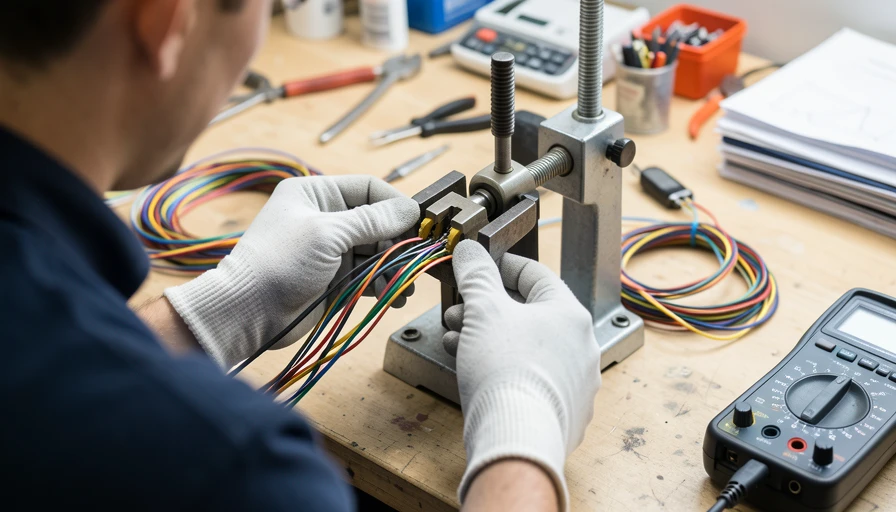
How Should Buyers Compare Custom Wire Harness Manufacturers?
Buyers should compare documented application fit, workmanship, process controls, testing, commercial fit, and support. A quote alone cannot show whether a supplier can repeatedly build and verify the required harness.
Use the same selection sequence for every candidate: define controlled requirements, request objective evidence, compare samples against written acceptance criteria, and audit the proposed production plan. This keeps attractive pricing or a polished capability page from outweighing gaps in traceability, testing, or change control.
Which criteria belong on a supplier scorecard?
A scorecard should weight the risks of the actual program rather than apply generic percentages. Record each supplier’s requirements match, evidence quality, quality controls, design-for-manufacture support, minimum order quantity, lead time, communication, and change-control process. Add landed-cost risks such as tooling, samples, testing, freight, duties established for the shipment, rework, and inventory exposure.
Define what earns an acceptable result before reviewing proposals. Evidence can include a controlled procedure, a relevant anonymized record, or a successful sample inspection. Record unanswered items separately from failed items so the sourcing team knows what must be resolved before approval.
What Evidence Should You Verify When Comparing Wire Harness Manufacturers?
Buyers should verify certificates and their scope, IPC/WHMA-A-620 workmanship evidence, crimp-validation records, first-article documentation, and lot-specific test logs. Each record should be current, relevant to the proposed production site, and tied to the harness or process being evaluated.
For a claimed certificate, check the identifier, issuing body or registrar, covered address and activities, expiry date, and audit scope in the issuer’s database. Check any claimed UL file there as well. The IPC standards organization and the Wire Harness Manufacturers Association provide neutral context on workmanship and the harness industry, but neither link implies endorsement of a supplier.
Separate a statement that a company builds to IPC/WHMA-A-620 from independently evidenced certification. A workmanship standard sets acceptance expectations; marketing language by itself does not establish that an independent audit occurred. The purchase order should identify the required standard revision, class, approved exceptions, and records that must accompany each lot.
What should crimp records show?
Crimp records should identify the terminal, wire type and size, applicator or tool, setup parameters, operator or machine, date, and acceptance criteria. Request evidence of pull-force results and, where required, cross-section analysis with measured features. Calibration status, sampling frequency, failure disposition, and links to the production lot help show whether the result is controlled rather than a one-time demonstration.
What should a harness test log show?
A harness test log should identify the part and revision, serial or lot number, test equipment, calibration status, date, operator, programmed limits, actual result, and pass or fail disposition. Verify that continuity, isolation, hipot, or other tests match the drawing and end use. Ask how failures are contained, investigated, retested, and approved after repair.
What Application Requirements Matter for Military Wire Harness Manufacturers and Aerospace Wire Harness Manufacturers?
A supplier must be evaluated against the controlled drawing, end-use environment, required workmanship class, and traceability or inspection plan for the actual military or aerospace program. A generic industry page does not prove experience with a safety-critical application or its acceptance requirements.
Define voltage, current, wire size in metric and AWG where applicable, operating and storage temperature, vibration, fluid exposure, shielding, and electromagnetic-control needs. The drawing should also control minimum bend radius, routing and branch geometry, connector orientation and keying, strain relief, labels, coverings, and mating components.
Specify approved wire, terminals, seals, connectors, backshells, and alternates. State the required material traceability, shelf-life handling, configuration control, special-process records, inspection points, and acceptance criteria. Relevant program documents may reference engineering standards available through SAE International, but the buyer must name the applicable document and revision rather than assume a supplier applies it.
How should Class 3 workmanship be specified?
Purchase documents and the acceptance plan should explicitly state the required IPC/WHMA-A-620 class, revision, and evidence. Identify any drawing-specific criteria, inspection magnification, sampling plan, first-article requirements, and records to retain. Ask the supplier to confirm these requirements in writing and demonstrate them on the sample before pilot approval.
Should You Use Wire Harness Manufacturing Near Me or Wire Harness Manufacturers in China?
Domestic sourcing can simplify site visits, engineering contact, and urgent logistics, while China sourcing can suit cost-sensitive or integrated electronics programs when evidence, communication, and logistics are controlled. Neither location is automatically cheaper, faster, or higher quality for a particular harness.
Compare total landed cost with the same scope: tooling, samples, qualification testing, production, packaging, freight, inventory, rework exposure, and duties or tariffs established for the actual shipment. Also compare time-zone overlap, sample-iteration speed, audit access, intellectual-property controls, production-scale fit, and the recovery plan for freight or facility disruption.
Test communication during the RFQ. Give both candidates the same controlled package and record response accuracy, unresolved assumptions, revision handling, and the time needed to close technical questions. A low unit quote can lose its advantage if it requires more inventory, repeated samples, expensive freight, or avoidable engineering effort.
When is a local supplier worth the premium?
A local supplier may justify a higher quote when rapid physical access materially reduces program risk or response time. Examples include unstable early designs, frequent fit checks, urgent service parts, difficult source inspection, or a launch that needs close engineer-to-production contact. Compare that risk reduction with the full cost difference instead of using an invented price threshold.
What Should You Ask a Custom Wire Harness Manufacturer Before Quoting?
A useful quote should begin with a controlled drawing, bill of materials, performance requirements, acceptance criteria, forecast, and delivery needs. Without those inputs, suppliers will price different assumptions and the resulting quotes will not be comparable.
Include wire and connector part numbers, approved alternates, pinout, cut or finished lengths, tolerances, labels, coverings, environmental limits, workmanship class, and electrical or mechanical test limits. State the first-article quantity, annual volume, expected lot size, packaging, delivery destination, and revision-control method.
- Materials: Identify manufacturer part numbers, color, gauge, insulation, terminals, seals, connectors, coverings, and customer-supplied items.
- Construction: Define branch dimensions, breakout locations, orientation, stripping, crimping, soldering, shielding, splices, overmolding, and marking requirements.
- Acceptance: Name workmanship criteria, inspections, test limits, sampling, first-article documents, traceability, and record-retention needs.
- Commercial demand: Provide sample, pilot, and production quantities, forecast variability, delivery cadence, packaging, and required quote validity.
- Control: State the current revision, approved deviations, substitution authority, and how engineering changes will be communicated and accepted.
What DFM support should a supplier provide?
DFM support should identify drawing conflicts, unavailable parts, tolerance risks, tooling needs, test access, assembly constraints, and opportunities to clarify repeatable construction. Require each proposal to cite the affected requirement, explain the consequence, and place any alternative under formal buyer approval. A supplier should not silently replace a specified component or relax an acceptance criterion.
How should MOQ and lead time be compared?
Compare minimum order quantity and lead time by stage, with sample, pilot, and production assumptions separated. Ask for quantity breaks, one-time tooling, material procurement time, build time, test time, capacity assumptions, and the point at which the clock starts. Treat dates as proposal terms to be confirmed, not guarantees inferred from a website.
How Should You Compare Contract Manufacturing Services for Custom Wire Harnesses?
Buyers should compare the complete production and quality system, not an isolated unit quote or broad capability list. The winning commercial proposal still needs controlled sourcing, repeatable processing, appropriate testing, and a credible continuity plan.
Review how the contractor approves sources, verifies incoming material, controls customer-owned and supplier-owned tooling, and prevents unauthorized substitutions. At production level, examine crimp setup and monitoring, in-process inspections, electrical-test programming, equipment calibration, nonconformance handling, repair authorization, and lot release.
Require engineering changes to flow from an authorized revision into purchasing, work instructions, test programs, labels, and inspection records. Capacity planning should address material constraints, forecast changes, bottleneck equipment, trained staffing, and recovery options without relying on unsupported capacity claims.
- Sample gate: Confirm fit, pinout, construction, material identity, and documented test results against written criteria.
- Pilot gate: Build a representative lot using intended tooling, instructions, operators, inspections, packaging, and traceability.
- Production gate: Approve release only after pilot issues close and the control plan, change process, capacity assumptions, and acceptance records are agreed.
How do you compare sample quality with volume readiness?
A good sample proves that one or a few units can meet the stated criteria; it does not prove repeatable batch control. Review process capability where appropriate, setup verification, lot traceability, operator instructions, inspection sampling, test-data retention, and nonconformance trends during the pilot. Volume approval should depend on that system evidence as well as the sample itself.
Which Custom Wire Harness Manufacturers Belong on the Shortlist?
The shortlist should contain several suppliers that meet the same evidence threshold, with no automatic winner based on location, company size, or marketing claims. Buyers should screen every candidate with the same requirements, sample criteria, process questions, and production-readiness gates.
Domestic US harness houses may make visits and working-hour contact easier, but they may not meet every landed-cost target. PCBWay and JLCPCB offer cable and harness services within broader electronics-manufacturing offerings, so buyers should verify harness-specific process depth. MOKO Technology and Scondar are China-based candidates whose project evidence needs the same review, while buyers considering BizLink’s larger-supplier model should confirm prototype and low-volume fit.
OurPCB’s manufacturer-published harness capabilities state a headline range of 40 AWG to 120 mm2, up to 600 V, -65 C to +200 C, and up to 50 cores. Other company pages publish conflicting wire and conductor ranges, so buyers should confirm the current controlled capability for the RFQ.
The company says its processes include cutting and stripping, crimp-force monitoring, soldering, ultrasonic wire welding, overmolding, heat shrink, shielding, marking, and sleeving. It also states that it performs 100 percent electrical continuity testing, isolation testing, hipot testing, pull testing, cross-section crimp analysis, and IEC spot testing at outgoing QC. Request the project procedure, limits, equipment calibration status, and sample records.
OurPCB states that its harness workmanship builds to or complies with IPC/WHMA-A-620, and company pages state compliance with or building to several other quality and environmental standards. Its site does not publish certificate numbers, audit reports, or a UL file number, so these statements should not be treated as independently evidenced certification. Manufacturer-published pages also list multiple connector brands, but buyers should verify approved parts, authorized sourcing, and component evidence for the project.
For scheduling, the company states quick-turn samples in 24 to 72 hours, prototype first articles in 7 days, production in 15 to 20 days, a one-piece sample minimum, pilot runs of 50 to 100 pieces, and volume pricing from 500 units. These are company-stated figures, not delivery guarantees; confirm them against material availability, test scope, quantity, and the controlled drawing. Keep the quick-turn sample assumption separate from the normal prototype first-article plan when comparing proposals.