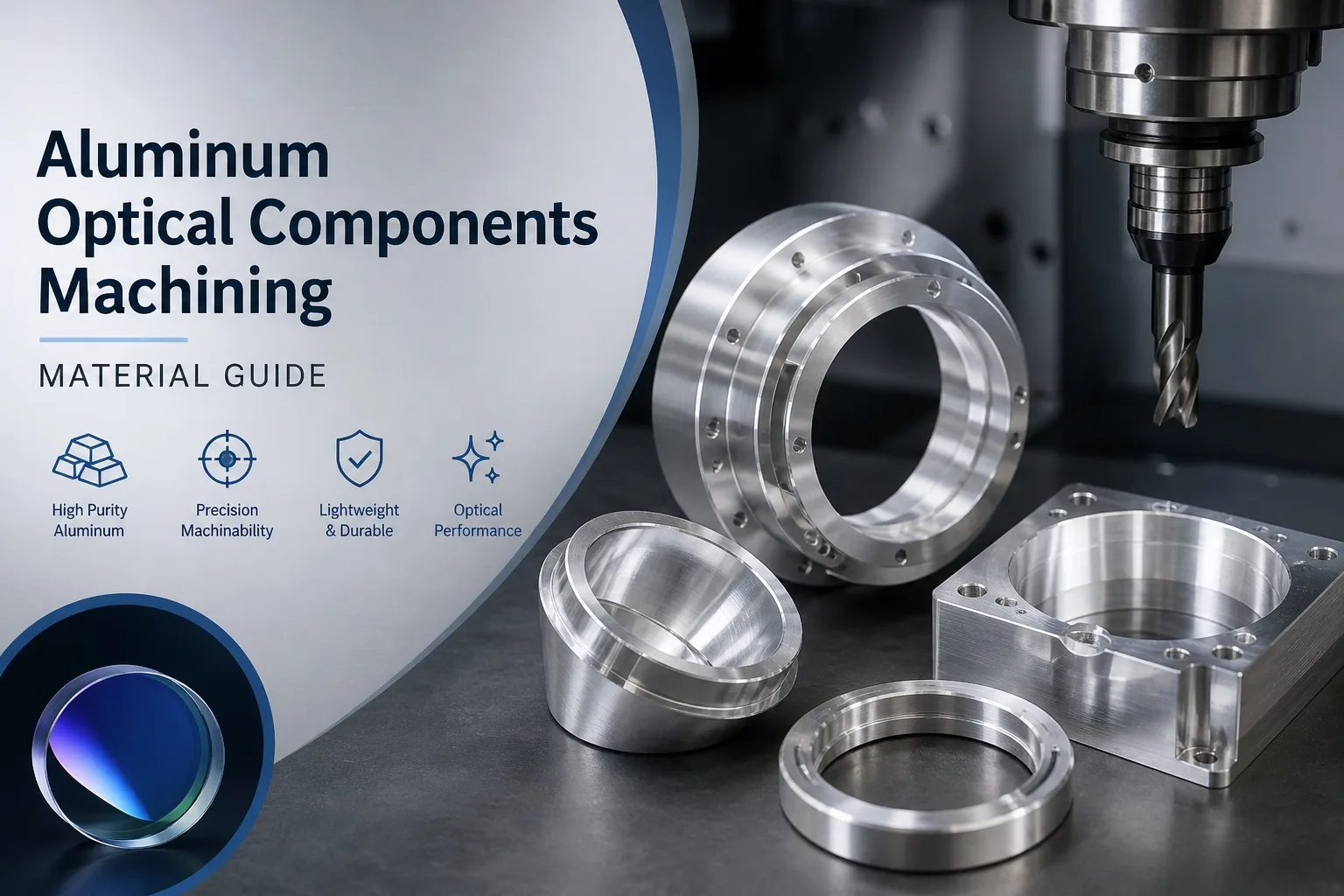
Introduction to Material Selection for Optical Components
The performance of optical systems depends heavily on the materials used in their components. Whether for telescopes, lasers, or imaging equipment, the choice between aluminum, invar, and stainless steel affects dimensional stability, weight, and cost. Each material brings unique thermal and mechanical properties that suit different applications. For engineers and procurement professionals, understanding these differences is essential for optimizing design and manufacturing. In recent years, aluminum optical components machining has gained attention for its ability to produce lightweight parts with excellent thermal conductivity, making it a strong candidate for many precision applications.
Aluminum: Lightweight and Thermally Efficient
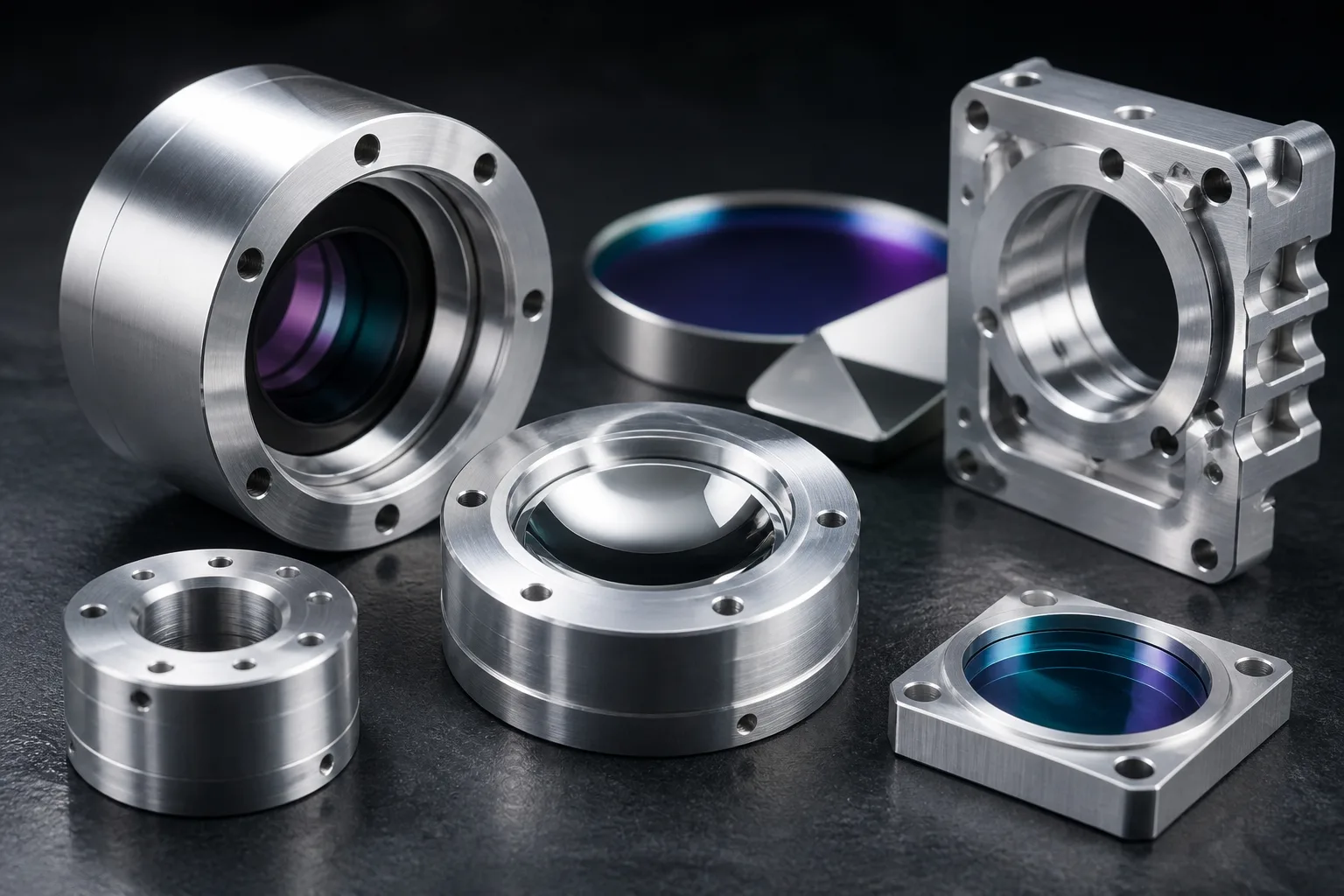
Aluminum alloys, such as 6061-T6, are widely used in optical mounts, mirror substrates, and heat sinks due to their low density and high thermal conductivity. With a density of 2.7 g/cm³, aluminum significantly reduces the weight of optical assemblies, which is critical in aerospace and portable instruments. Its high thermal conductivity of 167 W/m-K allows for efficient heat transfer, minimizing thermal distortion and improving system stability. However, aluminum has a coefficient of thermal expansion (CTE) of 23.1 µm/m-°C, which can be a limitation in environments with wide temperature swings. According to the Engineering Toolbox, aluminum’s thermal conductivity is superior to invar and stainless steel, making it ideal for applications where temperature control is important. Machining aluminum requires attention to avoid burring, but modern CNC techniques can achieve tight tolerances. Surface treatments like nickel plating can enhance wear resistance for optical applications.
Invar and Stainless Steel: Stability and Strength
Invar, a nickel-iron alloy, is renowned for its extremely low CTE of approximately 1.2 µm/m-°C, making it the material of choice for precision reference structures, etalons, and optical benches where thermal expansion must be minimized. Invar is denser (8.0 g/cm³) and more expensive than aluminum, but its stability justifies the cost in high-precision applications such as interferometers and metrology equipment. Machining invar requires specialized tooling due to its hardness and tendency to work-harden. The ASM International Materials Database provides detailed information on invar’s properties, which is essential for design engineers. Stainless steel, such as grades 304 or 316, offers a balance of strength, corrosion resistance, and affordability. With a CTE of 17.3 µm/m-°C and thermal conductivity of 16 W/m-K, it provides moderate thermal performance. Stainless steel is commonly used in optical housings, support brackets, and kinematic components where durability is required. Its density of 8.0 g/cm³ makes it heavier than aluminum, but it offers excellent mechanical properties and corrosion resistance. Machining stainless steel is straightforward with carbide tooling, but care must be taken to avoid work hardening and to achieve the desired surface finish.
Comparing Properties and Making the Choice
When selecting a material for optical components, the following properties are critical:
-
Density: Aluminum 2.7 g/cm³, Invar 8.0 g/cm³, Stainless 8.0 g/cm³
-
CTE: Aluminum 23.1, Invar 1.2, Stainless 17.3 µm/m-°C
-
Thermal Conductivity: Aluminum 167, Invar 10, Stainless 16 W/m-K
-
Cost: Aluminum Low, Invar High, Stainless Medium
These factors influence application suitability. For example, aluminum is best for heat-sensitive systems where weight and thermal management are priorities. Invar is ideal for temperature-stable environments requiring extreme dimensional stability. Stainless steel offers a cost-effective option for robust structural use. Each material requires specific machining approaches to achieve the desired surface finish and dimensional accuracy. Consulting with a precision machining expert can help you navigate these choices and optimize your design for manufacturability. A cost-benefit analysis should consider not only material costs but also machining complexity and performance requirements.
Conclusion
Understanding the differences between aluminum, invar, and stainless steel is essential for designing high-performance optical components. By evaluating thermal expansion, weight, thermal conductivity, and cost, you can select the material that best meets your project’s needs. Precision CNC machining services, such as those provided by XTJ CNC, can produce parts from these materials with tight tolerances and excellent surface finishes, ensuring your optical systems perform reliably in their intended environments. Whether you prioritize lightweight design, stability, or strength, the right material choice will enhance your optical system’s performance and longevity.